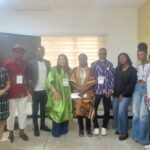
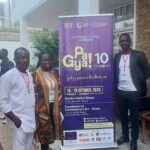
 Heritage Dialogue, led by its founder, Dr. Florence Plockey, joined writers, readers, and cultural practitioners at the Pa Gya! Literary Festival’s 10th-anniversary edition, held in Accra from October 15 to 17, 2026.
Launched in 2017, the three-day festival celebrates books, storytelling, and creative expression while promoting Ghanaian and African literature. The Writers Project of Ghana, Goethe-Institut Ghana, and the Foundation for Contemporary Art–Ghana jointly organize the festival, which is held annually in Cantonments, Accra.
The 10th edition brought together participants from across West Africa, including Liberia and Nigeria, as well as from Europe, North America, and the Caribbean, providing a platform for literary exchange and promoting underrecognized talent.
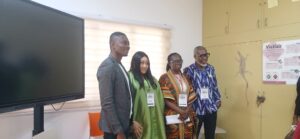
On Saturday, October 17, the Heritage Dialogue team led two panel discussions on access to reading spaces and preserving Africa’s oral traditions and indigenous knowledge.
The first session, titled “Where Do We Go to Read?”, featured Yaw Mankatah Asare, Dr. Florence Plockey, and Enyonam Damesi. The discussion examined how the places where people encounter books and stories shape reading habits and literary engagement.
Panelists described libraries as important community resources but noted that many remain under-resourced and are often perceived primarily as places for academic study and exams. They identified homes and schools as foundational spaces for developing reading habits and highlighted the growing importance of bookshops, book clubs, reading cafés, mobile libraries, and literary festivals.
The discussion also considered the growing use of digital platforms, including mobile phones, e-books, and audiobooks. However, concerns remained about affordability, internet connectivity, and the limited availability of African literary content.
Panelists stressed that readers are more likely to engage with literature when they encounter stories that reflect their languages, experiences and identities. They called for collective efforts to establish accessible and inclusive reading spaces.
The second session, moderated by Amarachukwu Obika-Stevens, explored “Sources of Oral Tradition for Writers: Preserving Indigenous Knowledge and Cultural Heritage.” It featured Dr. Florence Plockey, Donus W. Buadi, Festus Amoako, and Yao Joseph Edem Homadji Ladzekpo.
The discussion challenged Eurocentric approaches to documenting oral traditions and advocated Afrocentric methods that recognize their living, communal nature. Questions of authenticity and representation were central, as panelists examined who determines the credibility of traditional narratives and whose accounts risk exclusion from historical records.
They also raised concerns about the responsibilities of state institutions, including the Ministry of Tourism and Culture, libraries, and archives, in safeguarding indigenous knowledge. Writers were encouraged to approach oral sources with respect and cultural sensitivity, recognizing themselves as custodians of knowledge rather than mere collectors of stories.
Although the two sessions examined different aspects of cultural preservation, they shared a common concern for protecting the spaces, stories and knowledge through which communities sustain their identities.
The discussions concluded with a call for families, elders, writers, librarians, archivists, cultural institutions, and government to collaborate to preserve Africa’s cultural heritage.
The central message was clear: reading spaces and oral traditions are vital repositories of memory, identity, and knowledge, and their survival depends on deliberate, collective action. As the panelists emphasized, today’s stories will become tomorrow’s history.